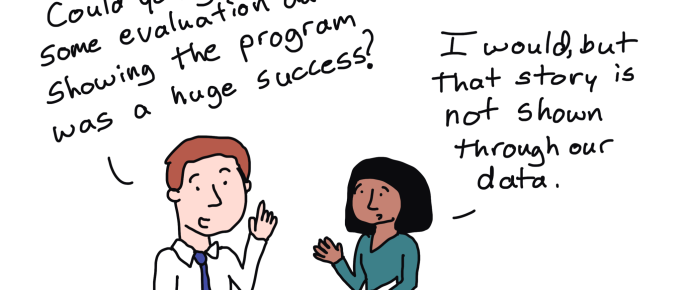
Summary: Evaluation maps really well to storytelling. Would it be easier if we just called ourselves story finders? I remember years ago sharing one of my evaluation cartoons with my mom. Her …

Virtual Community of Practice: Quick Launch Guide
Summary: This guide will walk you through five steps for launching a simple but effective virtual community of practice. Running a successful Community of Practice can take a significant amount …
Continue Reading about Virtual Community of Practice: Quick Launch Guide →
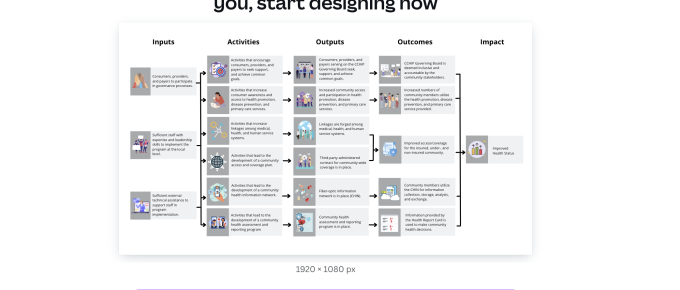
How to Create a Logic Model in Canva
Summary: You don't need fancy tools to create basic logic models. In this post I'm going to walk you through the visual creation of a logic model. If you want to learn more about developing the …
Continue Reading about How to Create a Logic Model in Canva →

What is a Logic Model?
Summary: A logic model is an attempt to show how your program is supposed to work. Have you ever gone for a walk or a drive without a particular destination in mind? I think it’s one of my …

Formative vs Summative Evaluation: Which One Do You Need?
Summary: A formative evaluation is about improving your program, activity, or intervention. A summative evaluation is about showing proof that it works. Let’s say you run a non-profit food …
Continue Reading about Formative vs Summative Evaluation: Which One Do You Need? →

What is Data Illustration?
Summary: Data illustration is the process of improving the accessibility of a data product by systematically adding pictures. This post introduces the concept and gives you a practical data …

What is Benefits Realisation and how does it connect to evaluation?
Summary: While evaluation asks "did this work and why," Benefits Realisation tracks whether specific organizational wins (like cost savings or better employee retention) actually happened as planned. …
Continue Reading about What is Benefits Realisation and how does it connect to evaluation? →

Choosing the right images for reports, presentations, and blog posts.
You already know that images are important. Without visuals there is no way we would be able to process the vast amount of information that we are now exposed to on a daily basis. An image …
Continue Reading about Choosing the right images for reports, presentations, and blog posts. →