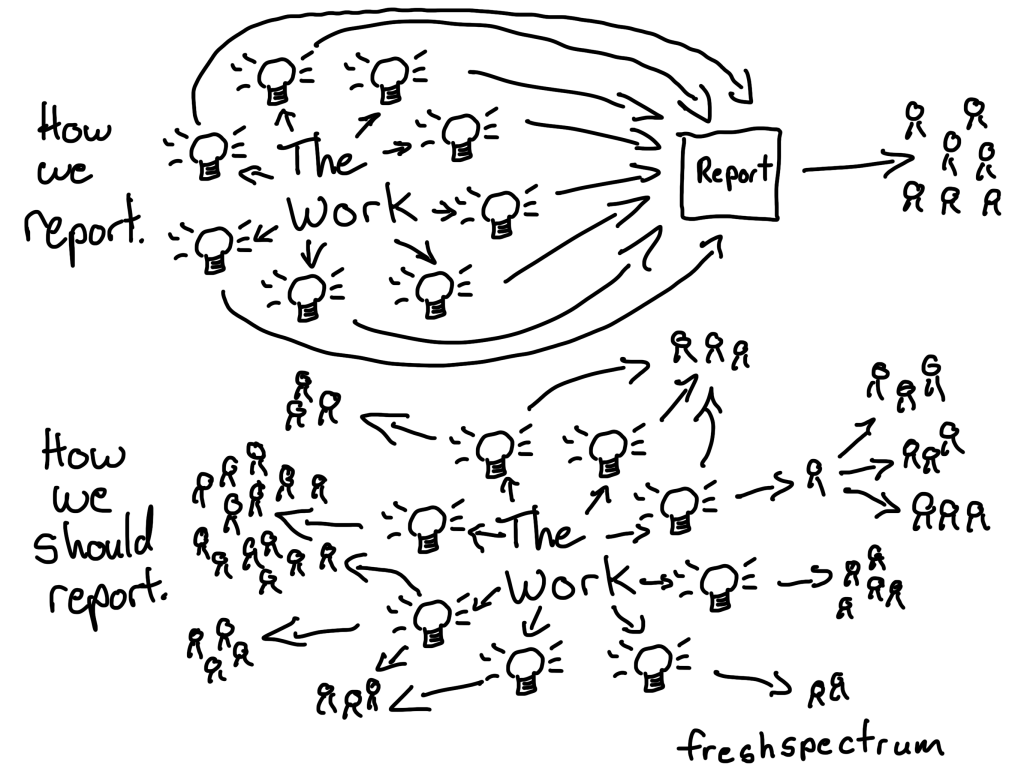
A Theory of Use helps you connect your insights to the people who need them most — before you start designing any dissemination products. It replaces the report-first mindset with an insight-first approach.
Step 1. Shift your thinking.
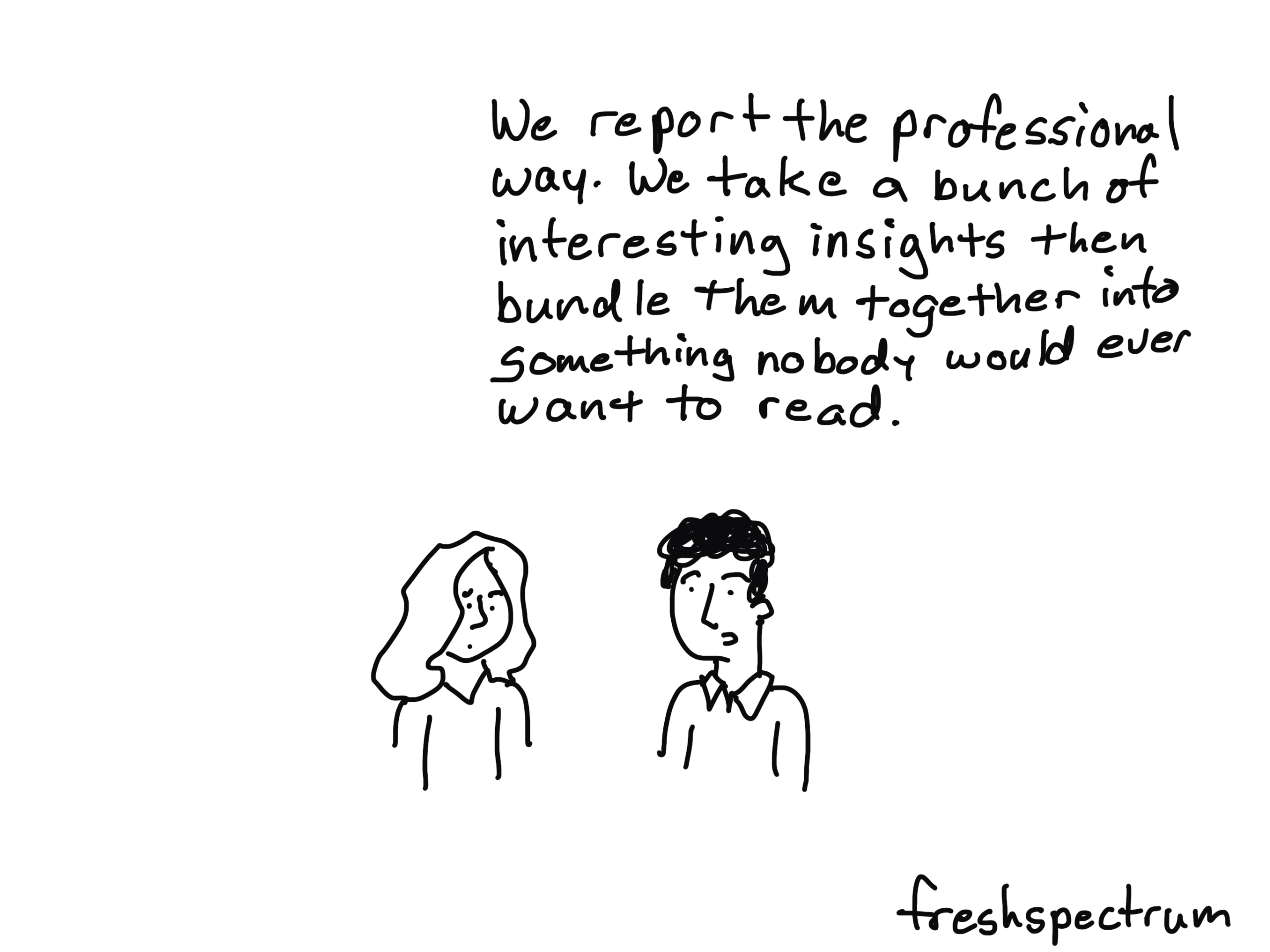
The report is not the product of your work. Insights are. Findings emerge throughout the research and evaluation process — don’t wait until everything is bundled together before thinking about who needs what.
Step 2. Identify your insights.
Look beyond primary findings. Consider recommendations, secondary findings, surprising or negative findings, process insights, methodological lessons, and contextual knowledge. Each is a candidate for dissemination.
Step 3. Match insights to audiences.
Use the five audience framework as a starting point — Client, Community, Influencers, Peers, and Public. An insight that matters to a policymaker may mean nothing to a community member, and vice versa.
Step 4. Define your target outcomes.
Downloads and likes are interactions, not outcomes. For each insight-audience pairing, name the outcome you are actually trying to achieve: awareness raised, questions answered, mindset shifted, behavior changed, decisions informed, policy supported or challenged, theory or practice informed, or transparency.
Step 5. Build your matrix.
Use a simple table with four columns — Source, Insight, Audience, and Outcome. Work through your findings row by row. Gaps will surface quickly: audiences who are not being served, insights that have no home, outcomes that nobody is targeting.
Step 6. Use the matrix to audit your existing plan.
You rarely start from scratch. The Theory of Use is most powerful as a diagnostic — it shows whether your current dissemination products are actually reaching the people they are meant to serve.