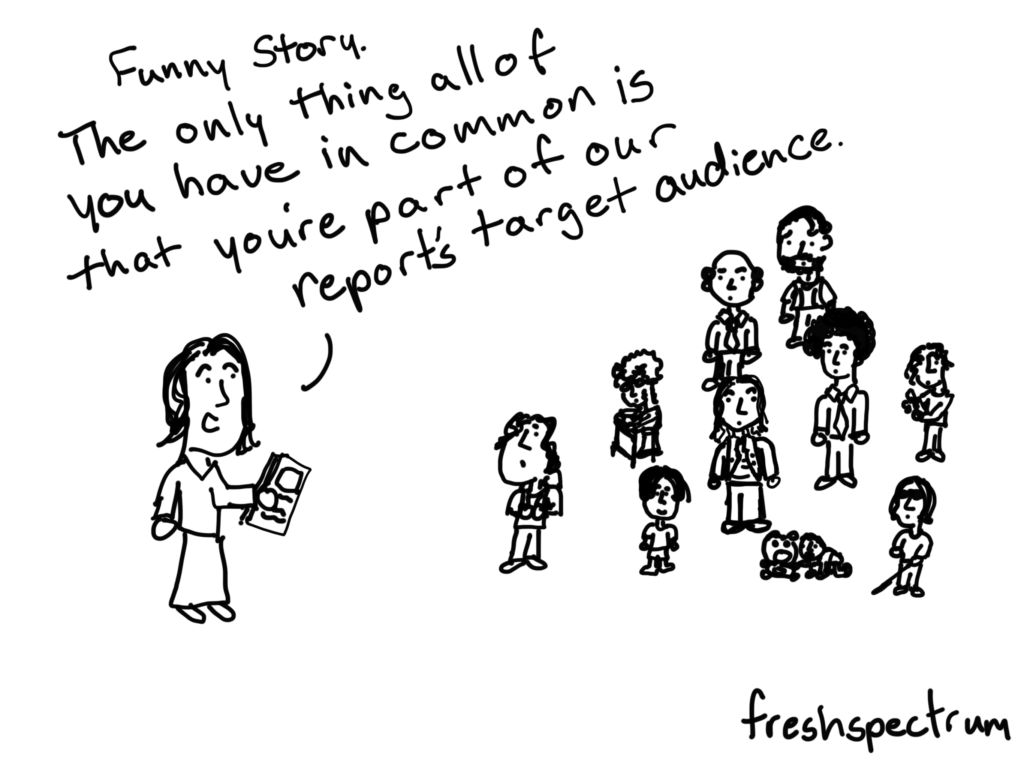
Every project has multiple audiences, and each one needs a different approach. This framework breaks dissemination down into five distinct audience categories. Each should have its own strategy.
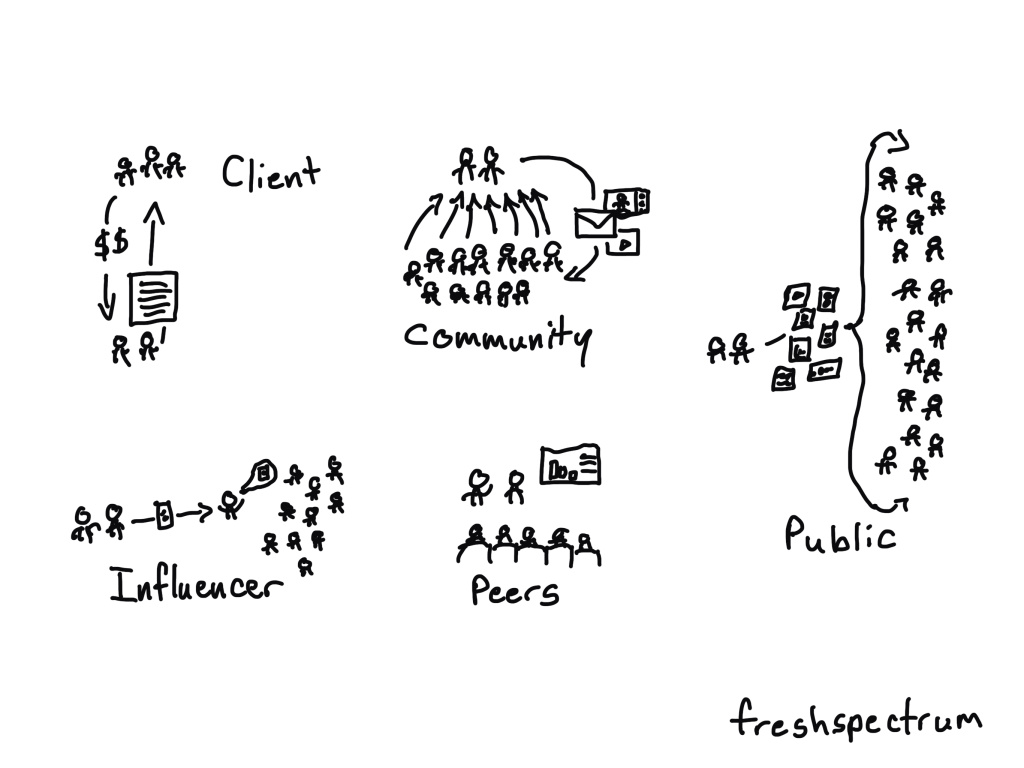
Audience 1. The Client The people who pay the bills.
Every project has someone holding the purse strings — a funder, a boss, a commissioner. They need accountability, completeness, and defensibility. They are almost always your primary audience by default, even if you pretend otherwise.
Serve them well, but not exclusively. Serving this audience above everyone else is one of the reasons our resources seem so inaccessible.
Audience 2. The Community Our work takes a village.
The people closest to the work — research participants, program staff, partner organizations, community members whose lives and experiences generated your findings. They have a claim on the work that no other audience does, but they’re often the least served.
Go to them. Don’t wait for them to come to you. It’s their data, not ours.
Audience 3. The Influencers Our work is often inherently political.
Community leaders, policymakers, decision-makers — the people who could actually act on your findings. They’re busy, skeptical, and driven by decisions they’re already trying to make.
Format matters less than timing and relationships. The best policy brief in the world is worthless if it arrives after the vote.
Audience 4. The Peers Our work can be field-building at times.
Other researchers, evaluators, and practitioners doing work like yours. Sharing with this audience contributes to a body of knowledge that makes everyone’s work better.
Journal articles and conference presentations are the norm, but only sharing in these formats keeps the ivory tower locked up tight.
Audience 5. The Public When our work has public implications.
The broadest and most uncertain audience. Not every project warrants a public audience — and pretending otherwise wastes effort and oversells findings. But when your work genuinely affects people’s lives, this audience deserves a real strategy. Not a PDF link on a resource page.
What about other audiences?
If you think a specific audience should be reached, create your own strategy for that audience. These five are a starting point, not a ceiling.
Next Steps and Additional Resources
- Five Audience Framework (Full Article)
- Theory of Use (Method)
- Five Audience Worksheet [coming soon]