Additional menu

Introduction: Why Qualitative Data Needs Pictures

Do you want to find the qualitative sections of a research or evaluation report?  

Here’s what you do, look for the sections without any pictures.

I know that sounded like a joke, but it’s not actually.

I’ve gone through countless qualitative reports: most of them have no pictures. None.  The same goes for qualitative sections inside mix-method reports.

You can test this for yourself. Search for an evaluation or research report from an organization you appreciate.  One that you think might have a qualitative section.  Then take a step back and just look at the report with your eyes.  This about seeing not reading.

When do they include visuals of any type?  Do they include any in the qualitative section?

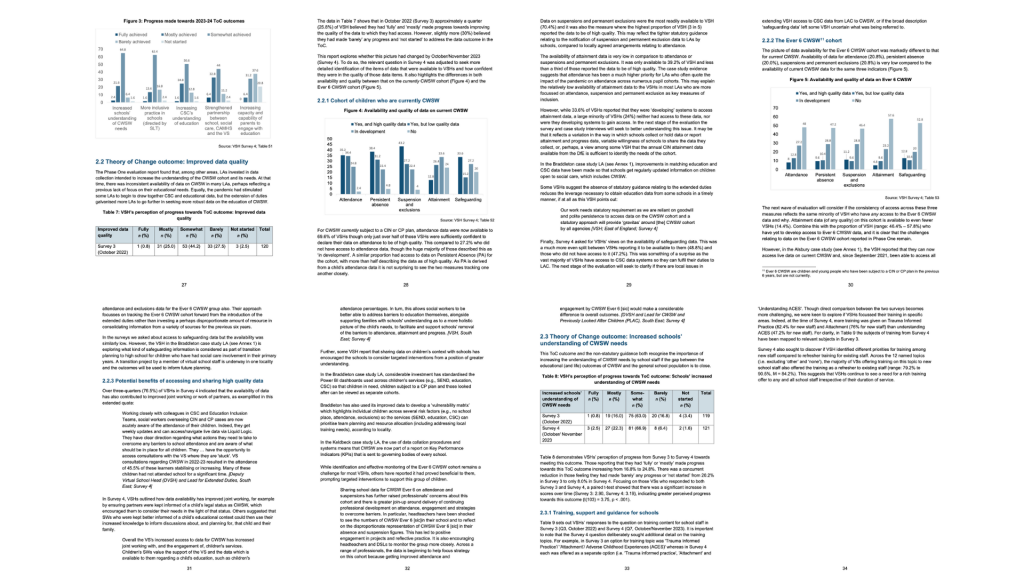
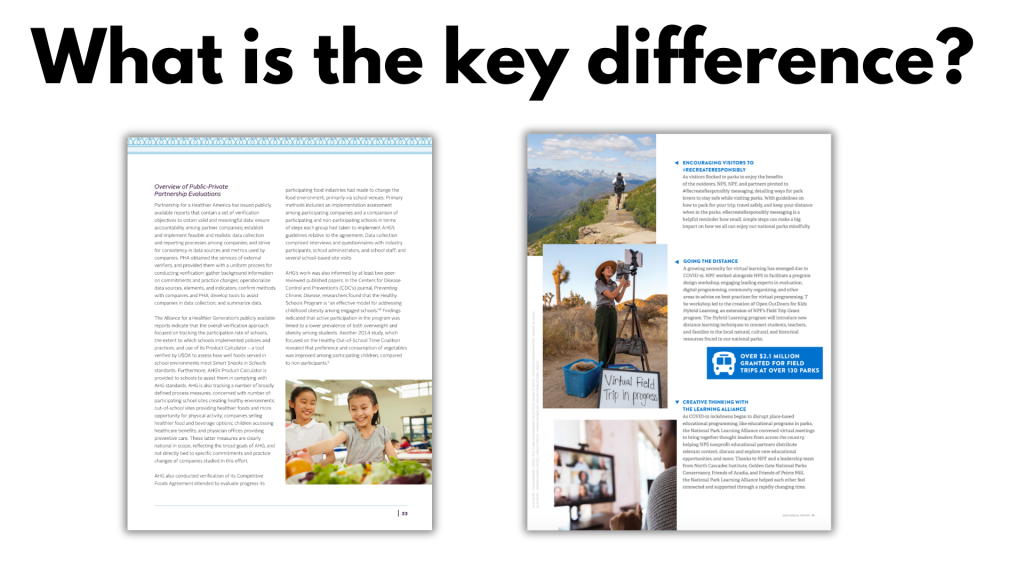
This is a screen shot of 8 pages from an education program evaluation. The pages without pictures feature qualitative information.
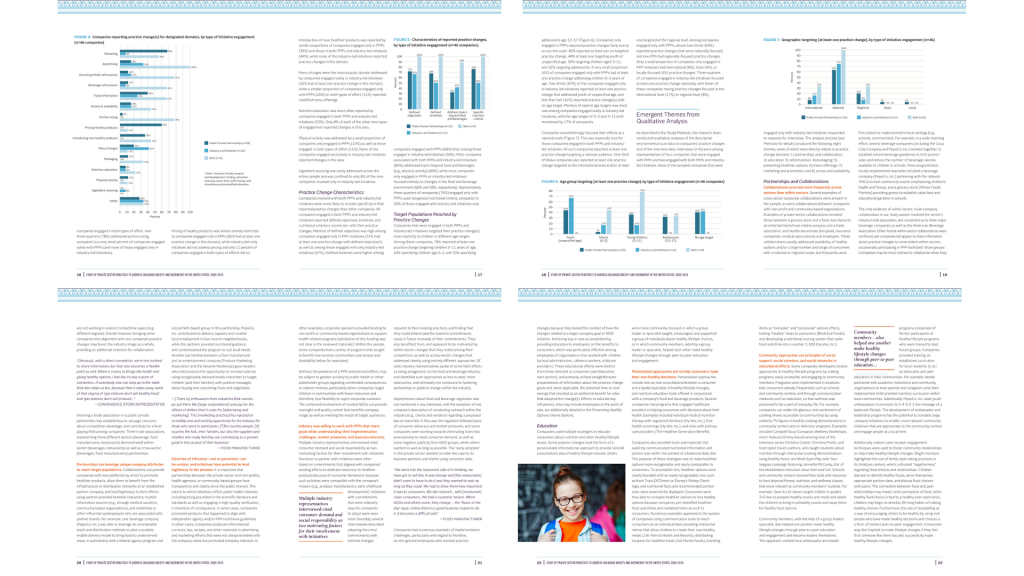
This is a report about childhood obesity. The top four pages are the quantitative section, the bottom four are the qualitative section.

The Quantitative Advantage

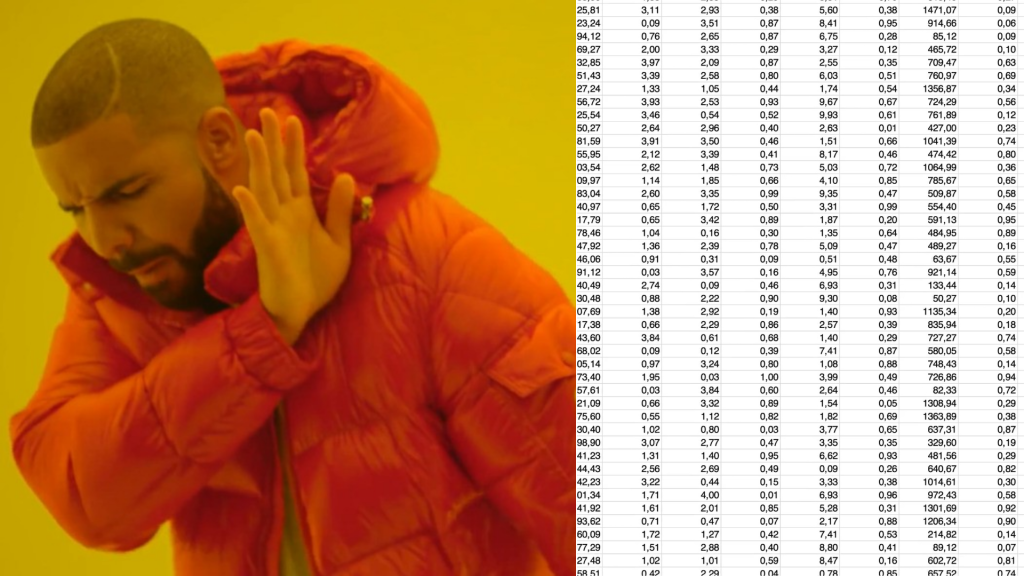
With quantitative data, we have it easy. We turn tables into charts almost systematically. Every section gets a chart. It’s what I’ve started calling “incidental illustration”—we keep turning tables into charts all the way through our reports, and we end up visualizing all sorts of things and illustrating our work almost by accident.

Even bad charts create natural breakpoints in your work. They can be processed faster than written text, help with information retention, and spotlight important information. Because all charts are a form of illustration.

The Qualitative Problem

But with qualitative, it’s almost flipped.

If you take one single quote from qualitative work and you try to read it, you can understand what’s going on. It tells a story. It goes into some depth. It gives you a specific example. It’s actually really easy to understand a single story or a single quote.

The challenge with qualitative is when we start adding everything together. All of a sudden, inside a qualitative section of a report, we just have quote after quote after paragraph, and it keeps going. 

A Different Definition

Most data visualization definitions you’ll find say something like “the graphical representation of information and data.” That works really well for quantitative information, but it doesn’t work as well for qualitative.

Here’s how I define qualitative data visualization:

The use of graphics to facilitate or enhance the communication of qualitative information and data.

We are visualizing so that information reaches our intended audience in a way that’s useful. We’re illustrating so that we can share that information with other people so that they can see it, understand it, connect with it.

The Mindset Shift

This book is really about a mindset shift. And that starts with understanding one key difference:

In traditional reports, we use a photo or visual if we have a good one and there is enough space. We visualize like this: when there’s a spot where there would have been some white space, we stick in a photo.

But in modern visual reports, every section gets a visual. Visuals are essential to the design. There is not a section that is not led with a visual—whether the picture is a photo, an illustration, a drawing, a chart, or a word cloud. There is always a picture.

It’s systematic. Purposefully designed. Every single time.

The Magazine vs. Journal Principle

Think about the difference between a journal and a magazine.

With a journal, if you’re going to use a visual, you have to defend it. You have to feel like you have to justify that visual. If you’re going to put a picture in, it has to be really relevant to the section.

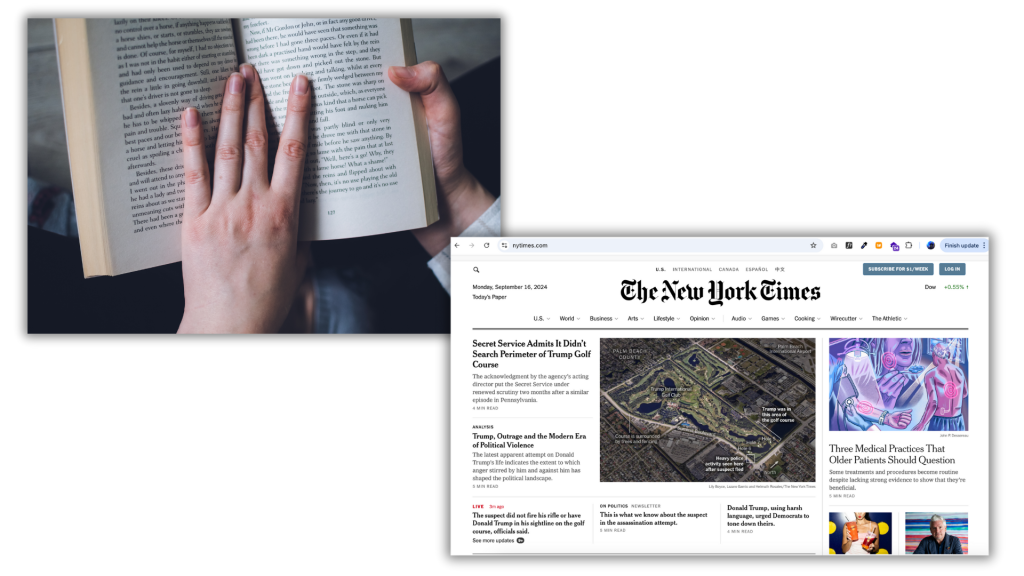
If you open up a National Geographic, every single article is going to have a picture. It doesn’t matter what the article is about. There are going to be regular pictures and photos and illustrations throughout the entire magazine.

When you look at the length of a magazine versus a journal, the magazine often has more information than a standard journal. But which feels harder to read and get into? It’s always the journal. Because it’s just all text.

Visuals are not optional in modern reporting.

In modern visual reporting, and in anything digital, every single website has a visual. Every well-designed webpage has a featured image. And somewhere in our subconscious: picture = important. No picture = not important.

That’s the fundamental mindset shift I want you to make as you go through this book.

What We’ll Cover

This isn’t about theory. I design for a living and I practice what I preach. My goal is to give you really concrete, practical things that you can take away and run with.

So in this book, we’ll explore:

Chapter 1. How to guide your illustration choices with the O.S.E.E. framework

Chapter 2. Fundamental concepts about how pictures and words work together

Chapter 3. Specific, easy-to-implement qualitative illustration techniques

Chapter 4. Practical tools and methods you can start using immediately

Chapter 5. How to pull it all together.

Let’s jump in.