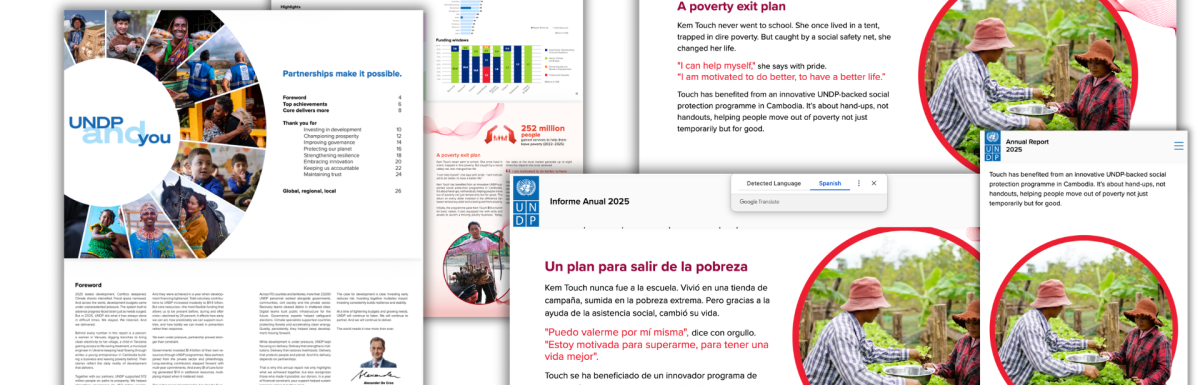
I’ve been working a lot on testing and improving my theory of use framework. Basically I take reports that should have pretty broad reach then run a kind of external dissemination audit.
It’s not quite the same as the dissemination audits I give my clients because with those I have a lot more insider information. With external ones I can only see what’s public. So that means I might miss some important things, such as a coordinated behind-the-scenes sharing effort. That said, there’s still a lot we can learn by just looking at what’s public.
UNDP Annual Report 2025
One of the reports I looked at recently was the UNDP Annual Report from 2025. UNDP has an operating budget in the billions of dollars, so it should be able to produce a professional looking annual report.
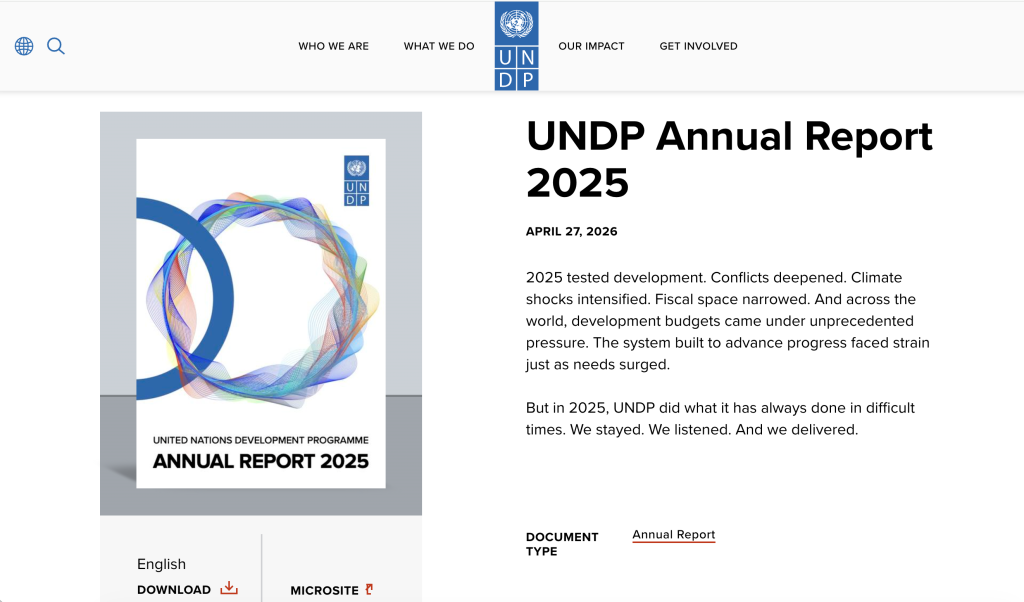
The report itself has a landing page with download button for the PDF and a link to a microsite. The microsite mirrors the content in the PDF. While the PDF is 15 pages, the microsite is about 10 with some content restructuring.
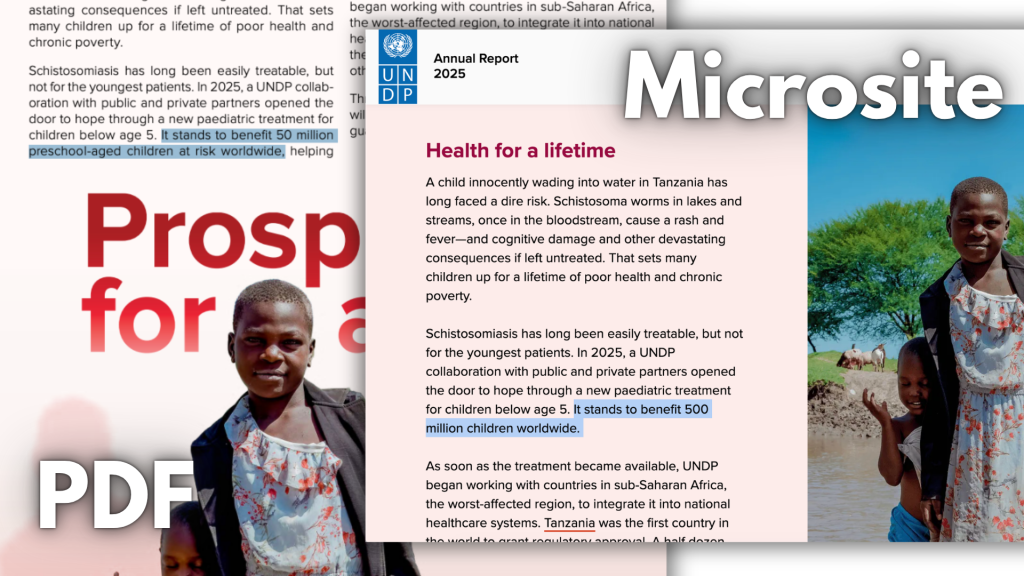
The only thing I really noticed in a comparison of the two was a pretty simple typo. The Championing Prosperity page on the microsite says the new schistosomiasis treatment stands to benefit 500 million preschool-aged children, while the PDF says 50 million. These kinds of things happen and if you’re reading this from UNDP, you should probably fix it.
First looks and readability.
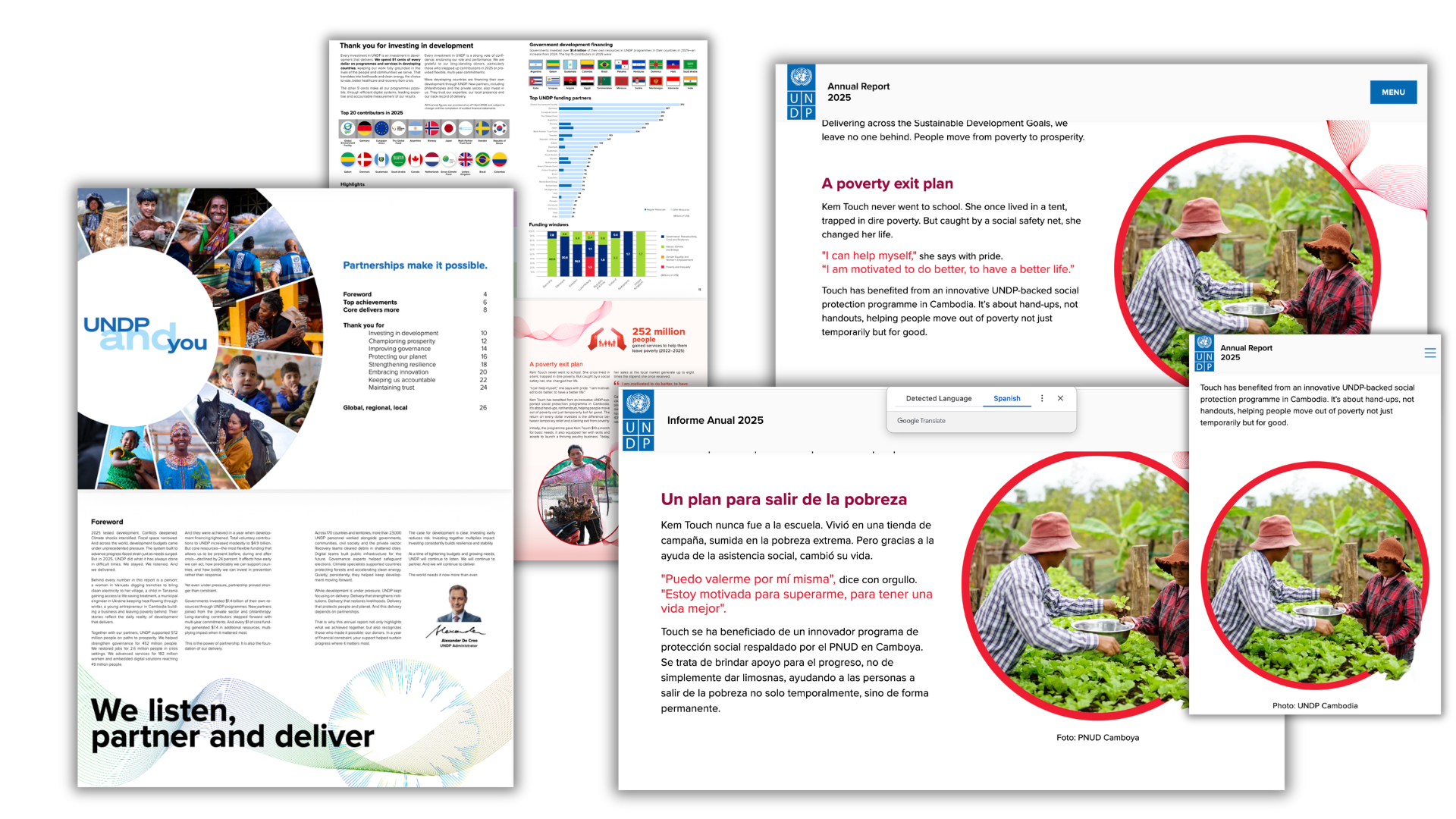
The report looks nice in both formats. It’s also fairly easy to read, sitting around 11th-12th grade reading levels which short sentences and paragraphs. It’s really only the big multi-syllable words bringing up the reading level.
Both the PDF and the Microsite are well illustrated. Because the microsite is HTML, it gets to take its time, so the pictures have more space and the font gets to be much bigger. It’s also mobile responsive and auto-translatable.
Searchability.
One of the other nice things about having a microsite alongside the PDF is that it can be indexed properly by Google. This is what it looks like when you google the report name. If this were just a PDF, it would essentially only have one line, with a pdf link (if that).
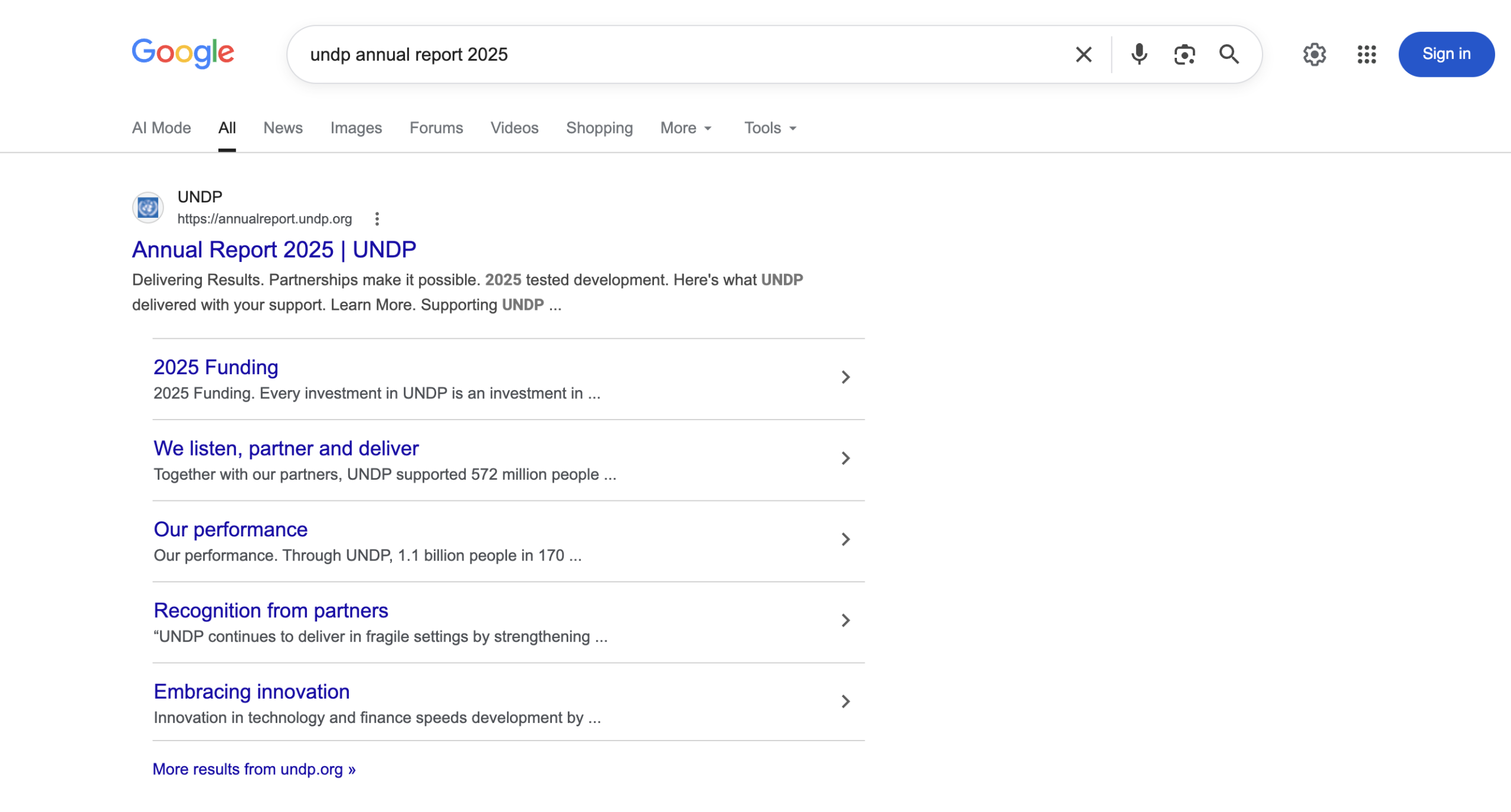
You might also notice that the link for the microsite doesn’t have 2025 in it. UNDP built a microsite a few years ago, and updates the site with the updated report each year. This is a really good idea for a number of reasons, one of those is that you get to keep the link’s credibility. Authority builds over time, so it helps.
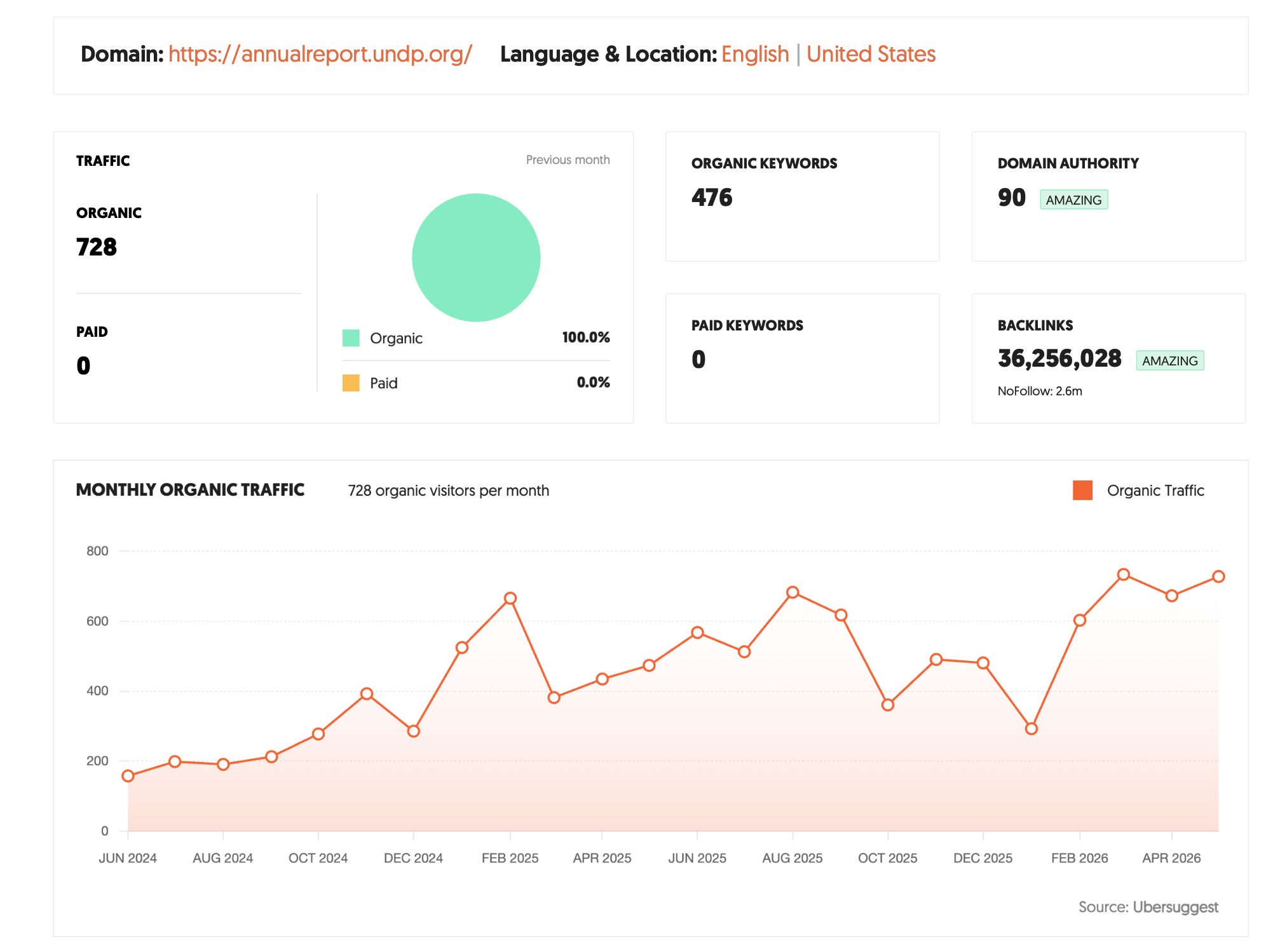
All that said, it’s not like the site gets a lot of traffic, especially considering UNDP is such a huge global organization.
Looking at the insights.
I asked AI to give me a list of 10 insights from the report. Here’s what Claude gave me.
- Core funding fell 24% (from $581M to $442M) — threatening UNDP’s ability to act early and prevent crises before they escalate
- Every $1 of core funding generated $7.40 in additional resources — the highest-multiplier investment available to donors
- 52% of UNDP expenditure ($2.67B) went to fragile and crisis-affected contexts — the majority of work is now crisis response, not development prevention
- Developing countries invested $1.4B of their own resources through UNDP in 2025 — a 17% increase — signaling growing country ownership
- A new paediatric schistosomiasis treatment enabled by UNDP can reach 50 million preschool-age children who were previously untreatable
- India’s U-WIN digital immunization registry pushed vaccine coverage from a stalled 65% to 93% — a replicable model for digital public infrastructure
- Cambodia’s social protection model returned $9 for every $1 invested, with a 40% rise in incomes and 60% boost in savings
- UNDP’s Gender Equality Seal expanded to 36 countries and 117 institutions including Arab States for the first time, reaching 330,000+ public servants
- Africa attracts just 4% of global climate finance — UNDP’s PISTA platform turned $2.5M into $400M potential follow-on investment
- 19th consecutive clean audit and 91 cents of every dollar to programmes, with operational efficiencies up 55% year-over-year
The insights you can pull from the report can give you a sense of how UNDP sees the annual report. Most of the insights are pulled directly from UNDP country office reports. So the annual report kind of works like an executive summary of stuff that’s happening across the globe. Most of what you find in there is not new, it predates the annual report.
| Insight | Origin | New to this report? |
|---|---|---|
| Core funding fell 24% | UNDP Executive Board docs, ongoing | New number, same story |
| $1 = $7.40 leverage | 2024 Funding Compendium verbatim | No — recycled from prior year |
| 52% crisis spending | New calculation for 2025 | Probably yes |
| Developing countries $1.4B | New 2025 figure | Yes |
| Schistosomiasis treatment | UNDP Tanzania press release, Sept 2025 | No — predates report |
| India U-WIN 65%?93% | UNDP India blogs, Gavi, The Hindu | No — predates report |
| Cambodia $9 per $1 | UNDP Cambodia programme comms | Likely predates report |
| Gender Equality Seal Arab States | June 2025 awards press release | No — predates report |
| Africa 4% climate finance / PISTA | UNDP Rome Centre blog, SDG Finance Hub | No — predates report |
| 19th clean audit / 91 cents | Every prior UNDP annual report | No — standing metric |
UNDP has its headquarters in New York City, but works primarily through its offices in about 170 countries and territories. These country offices also produce annual reports, and I think those country level reports are where we would find the most interesting info and detail.
The Actual Dissemination Effort.
If the content of the report is the important thing (the insights) then there should be evidence of those insights being shared. I like to look for footprints, some idea that the insights are being shared and used.
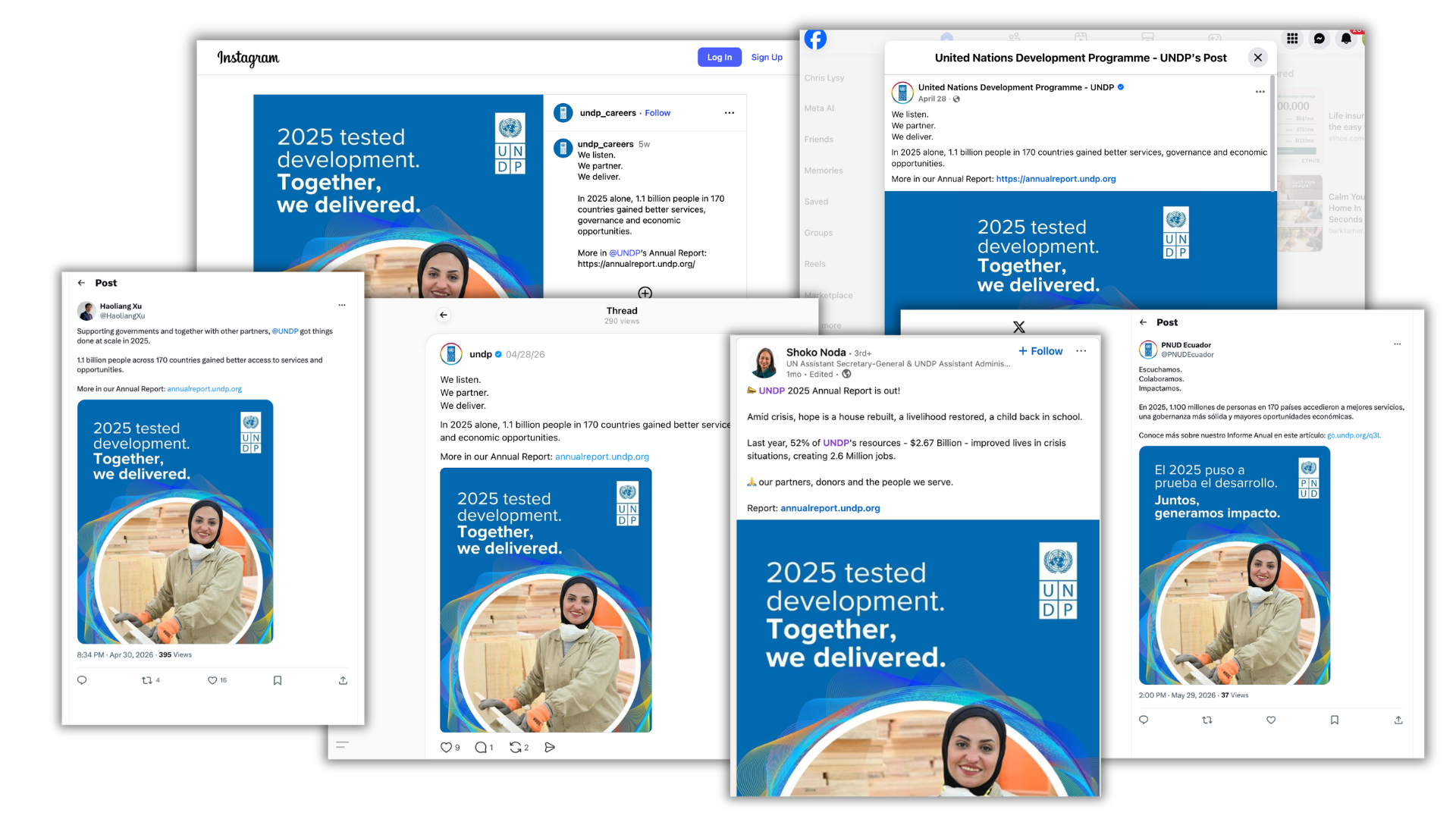
The social media effort was umm….
Standard?
Basically you get a lot of copy/paste across different accounts. Same picture. Same words. With only a couple exceptions, very little added insight. Not a lot of partners or undp officials sharing the report adding anything of value.
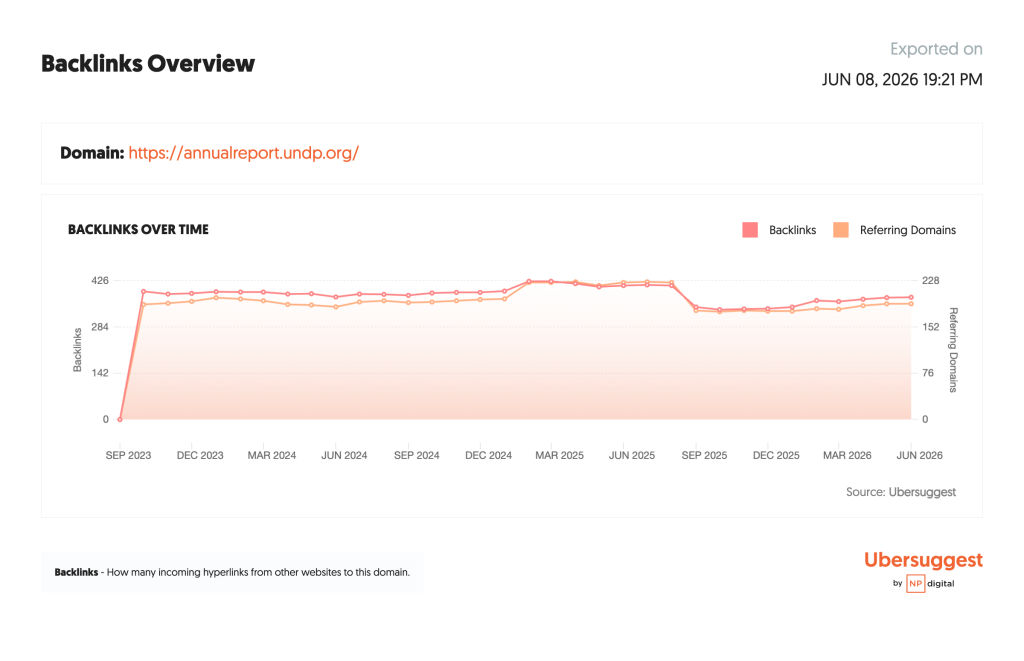
Looking at backlinks (incoming links from other sites) shows us that it hasn’t really gained any new ones in the past several years. Basically, the people who linked to UNDP annual reports years ago, are the same people linking to the one now.
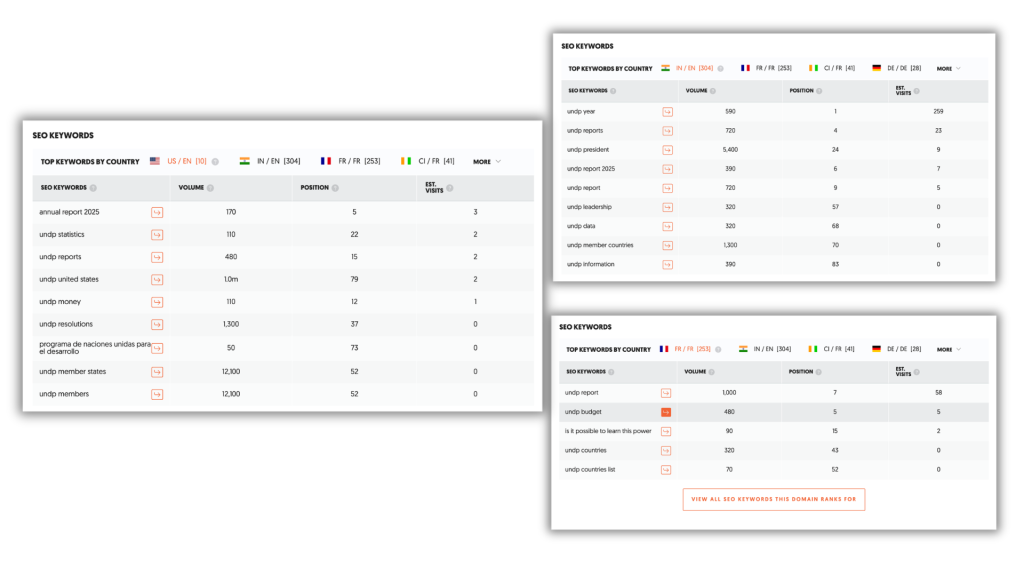
The report also barely makes an impression in terms of search. Yes, it’s formatted for the web, but that’s about it.
Is it a checkbox report?
So it’s readable. It’s well illustrated. It actually has an HTML version.
It exists, therefore it is?
Some of the interesting stuff in the report actually did travel, but not from this report. Several of the insights originally identified came from country office annual reports. They were the things that were shared directly with the press or launched at country office events.
The advice I would give.
If you’re the leader, be the leader.
The main office of UNDP should be championing ALL of the country office annual reports, not just cherrypicking the interesting insights. With so many country offices, this report should highlight the interesting bits with links back to the original sources. It doesn’t, and that shows.
There isn’t a back and forth link exchange between the organization report and the country level office report. If there was, the annual report would become more than just a throw-away executive summary. It would an invitation into a deep well of insights and get far closer to actual work of the organization.
Perhaps it might even be the kind of report that people want to share, because it’s interesting, and not because you’re on the comms team and it’s your job.