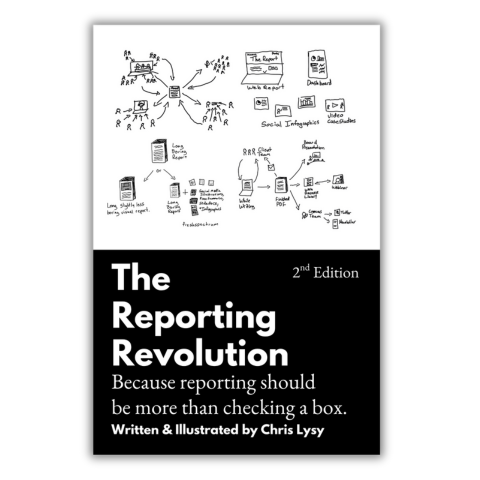
Like the cursed prophet Cassandra, researchers and evaluators have a gift to see truths others can’t—but unlike her, our curse is self-inflicted. We’ve been sharing our work the same way we did in the late 90s, writing reports as if the last 20 years never happened, and it’s time for a monumental change.
Your reports aren’t just information dumps—they’re telling a story about your entire profession, and right now that story isn’t flattering. It’s time to shift from treating reports as products to be delivered into treating reporting as a process that serves real people, because the status quo is a path toward irrelevance.
Before you can revolutionize your reporting, you need to know who you’re actually reporting to (hint: it’s probably not who you think). This chapter will help you identify your Big 3 audiences and understand the critical difference between building an audience and serving one.
Everyone is overwhelmed, and your 50-page PDF is making it worse. Learn three modern reporting strategies—the Modern PDF, the Web Report, and Report Blogging—that will help your work actually get read, shared, and used.
The HiPPO (Highest Paid Person’s Opinion) will kill your modern reporting dreams if you let them, but this chapter gives you the tools to lead change anyway. From building your design process to creating templates and style guides, you’ll learn how to make better reporting faster and more systematic.
Lots of organizations settle for boring, ugly reports year after year because they’ve convinced themselves they don’t have the money, time, or talent to do better—but YOU do. The real secret isn’t fancy software or massive budgets; it’s simply a person who really cares and is willing to take that first baby step.
Want to use the comics?
Most of my work is illustrated with comics. Please feel free to use them in your presentations, lectures, articles, and classes. As long as it’s NonCommercial and you attribute them to freshspectrum.com.
This license lets others remix, tweak, and build upon your work non-commercially, and although their new works must also acknowledge you and be non-commercial, they don’t have to license their derivative works on the same terms.